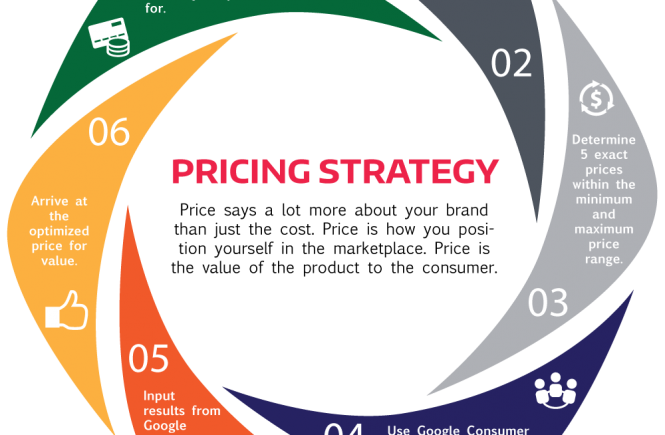
What good it is if you develop a product or service but you don’t know how to price it for your clients? You will surely lose the benefits of your efforts, for you either price yourself out – meaning the price is too much or you price yourself too cheaply. This is an element that is very important that you don’t lose revenue or you don’t fail in that business.
How do you ensure that you do not suffer clients’ rejection on the basis of pricing? We shall learn about various pricing strategies and then pick up on how we could apply them to various types of products or services.
My elder brother, Jasper, who was an astute carpenter and was at the top of his job could not make much money from his savvy artisan knowledge. Just because pricing was his problem. Until he went to our senior brother, Godson, then working with Controller and Accountant General’s Department as a Senior Accountant. Godson sat Jasper down and showed him how he could do estimates for his jobs and price his labour charges accordingly. Since then Jasper picked up making much returns on his labour until his untimely death.
Before pricing your product or service, the following factors must be taken into consideration:-
- Fixed and variable costs
- Competition
- Your personal objectives
- Proposed positioning strategies (where you want to be in the market)
- Target group and willingness to pay
Let’s look at the following pricing strategies and examples of how you could use them in the pricing of your service or products:-
-
-
- Penetration Pricing: Penetration pricing refers to a marketing strategy used by businesses to attract customers to a new product or service. Penetration pricing is the practice of offering a low price for a new product or service during its initial offering in order to lure customers away from competitors. Restaurants charge lower pricing at the launch in order to lure food buyers but later increase the price. I personally offer my articles for free reading. These articles are later converted into book format for sales.
-
-
-
- Price Discrimination: Price discrimination is a microeconomics pricing strategy where identical or largely similar goods or services are transacted at different prices by the same provider in different markets. This happens when there is heterogeneous markets, that is, the markets are generally different from each other. You could for example prepare a business plan for someone in the USA for say US$1000 but charge another person in Africa for the same service only at US$250.
- Skimming Pricing: The organisation sets an initial high price and then slowly lowers the price to make the product available to a wider market. The objective is to skim profits of the market layer by layer. This was seen in many mobile phone industries where initial sim cards were sold at higher prices but prices begin to fall as the year goes by.
-
-
-
- Competition Pricing: Setting a price in comparison with competitors. In reality a firm has three options and these are to price lower, price the same or price higher than competitors. Some organisations put up a price matching service to check what their rivals are bidding. Others will move further and refund back to the customer more money than the difference between their cost and the competitor’s price.
-
-
-
- Product Line Pricing: Pricing different products within the same product range at different price points. An instance would be a CD manufacturer offering different CD recorders with different features at different prices. Example, a recordable and non-recordable version. The greater the features and the benefit obtained the greater the consumer will pay. This sort of price discrimination assists the company in maximising turnover and earnings.
-
-
-
- Bundle Pricing: The organisation bundles a group of products at a reduced price. Common methods are buy one and get one free promotions. Within the some organisations are now moving into the regime of buy two and get one free. This strategy is very popular with supermarkets.
- Premium Pricing: The price is set high to indicate that the product is “exclusive”. Examples of products and services using this strategy include Mercedes, first class airline services, and Porsche.
-
-
-
- Psychological Pricing: The seller here will consider the psychology of price and the positioning of price within the market place. The seller will charge 99p instead $1 or $199.99 instead of $200. The reason why these methods work, is because buyers will still say they purchased their product under $200, even though it was a dollar away. Check out the price of this book, too. It is at $3.99 on Amazon and not $4.
-
-
-
- Optional Pricing: The organisation sells optional extras along with the product to maximise its turnover. This strategy is used commonly within the car industry. Vehicles with CD player and automatic transmission sells higher than manual transmission with cassette players.
-
-
-
- Cost-plus Pricing: The price of the product is production costs plus a set amount (mark-up) based on how much profit (return) that the company wants to make. Although this method ensures the price covers production costs it does not take consumer demand or competitive pricing into account which could place the company at a competitive disadvantage.
- Cost Based Pricing: This is similar to cost plus pricing in that it takes costs into account but it will consider other factors such as market conditions when setting prices. Cost based pricing can be useful for organisations or individuals that operate in an industry where prices change regularly but still want to base their price on costs.
-
-
-
- Value Based Pricing: This pricing strategy considers the value of the product to consumers rather than the how much it cost to produce it. Value is based on the benefits it provides to the consumer e.g. convenience, well-being, reputation or joy. Organisations or individuals that produce technology, medicines, and beauty products are likely to use this pricing strategy.
-
Look through the various pricing strategies and see which one would work best for your type of product or service. Have it at the back of your mind that you are not the only one in the market offering such product or service. And therefore to win customers to your end, you don’t just charge anyhow. Sometimes, researching the market is necessary for your pricing strategy to work.