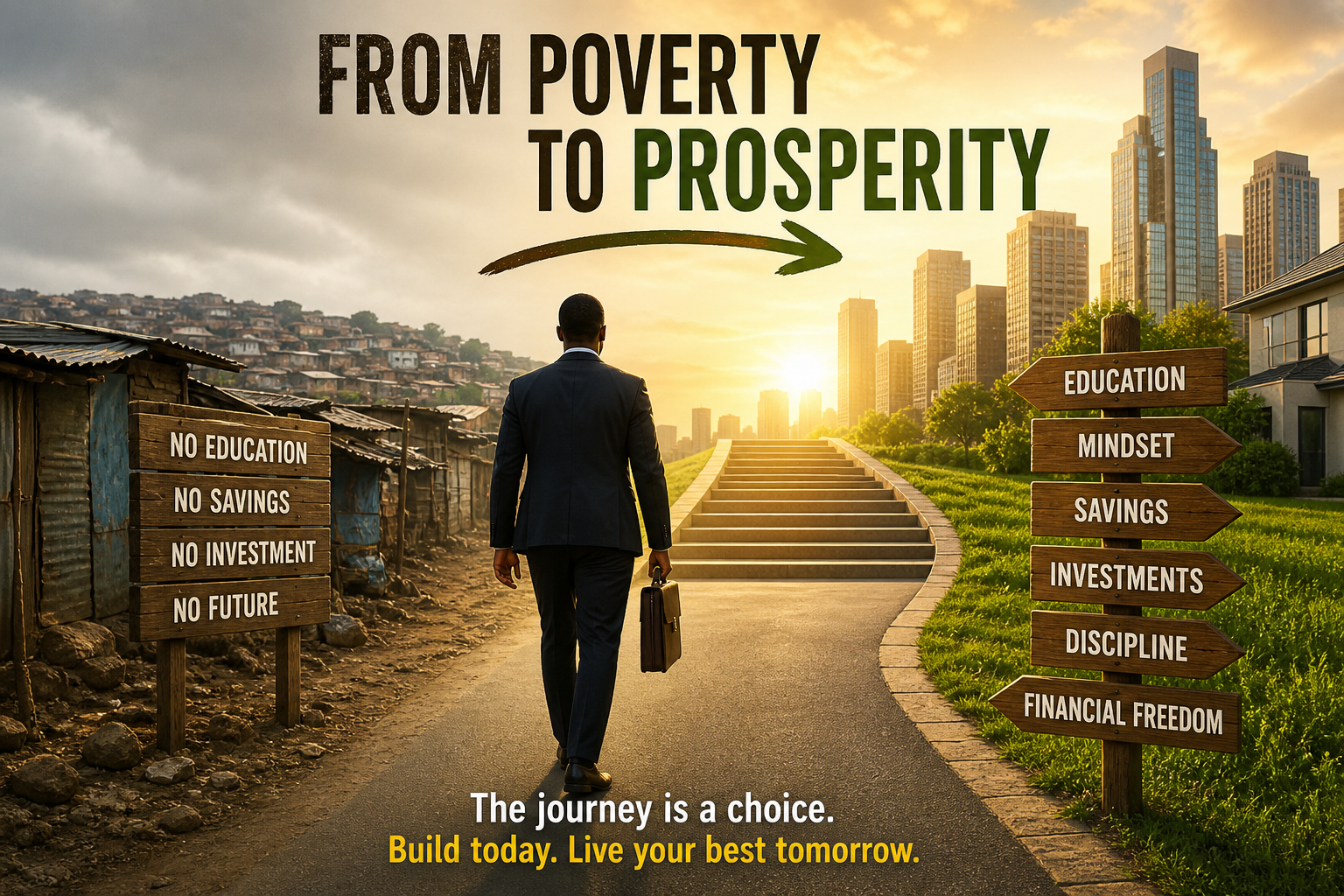
Poverty is not merely a lack of money—it is often a cycle reinforced by limited opportunities, restricted access to knowledge, and deeply ingrained financial habits. Prosperity, on the other hand, is not achieved overnight. It is built intentionally through disciplined choices, strategic thinking, and a long-term commitment to growth. As a finance professional, I have observed that the journey from poverty to prosperity is both practical and psychological, requiring a combination of education, mindset shifts, savings discipline, and smart investments.
1. Education: The Foundation of Financial Transformation
Education remains the most reliable pathway out of poverty. This does not necessarily mean formal university degrees alone, but also includes vocational skills, financial literacy, and continuous self-improvement. In today’s digital economy, access to knowledge is no longer a privilege—it is widely available through online courses, professional certifications, and mentorship.
Financial education is particularly critical. Understanding concepts such as budgeting, interest rates, inflation, and asset allocation empowers individuals to make informed decisions. Without this foundation, even an increased income can quickly be mismanaged.
2. Mindset Shift: From Survival to Growth
A critical but often overlooked element is mindset. Many individuals in poverty operate in “survival mode,” focusing only on immediate needs. While this is understandable, long-term prosperity requires a shift toward “growth thinking.”
This involves:
- Delaying gratification
- Setting long-term goals
- Believing that improvement is possible through effort and discipline
A growth mindset encourages individuals to see challenges as opportunities rather than barriers. It transforms financial behavior from reactive to proactive.
3. Savings Discipline: Building the First Layer of Security
Savings is the bridge between income and investment. Regardless of income level, cultivating the habit of saving—even small amounts—creates financial stability and resilience.
A practical approach includes:
- Paying yourself first (saving before spending)
- Setting aside at least 10–20% of income where possible
- Building an emergency fund covering 3–6 months of expenses
Savings provide a buffer against unexpected shocks such as medical emergencies, job loss, or economic downturns. More importantly, they create the capital needed to invest.
4. Investment: Turning Money into Wealth
Savings alone do not create prosperity—investment does. Money must be put to work to generate additional income. This is where many people either hesitate or make costly mistakes due to a lack of knowledge.
Key principles of investing include:
- Start early to benefit from compounding
- Diversify across asset classes (stocks, bonds, real estate, businesses)
- Focus on long-term growth rather than short-term speculation
In emerging economies like Ghana, opportunities exist in sectors such as agriculture, real estate, small businesses, and increasingly, digital ventures. The goal is to move from earning income through labor to generating income through assets.
5. Multiple Income Streams: Reducing Financial Vulnerability
Relying on a single source of income is risky. Building multiple income streams—such as side businesses, freelance work, or passive income sources—enhances financial security and accelerates wealth creation.
Digital platforms now make it possible to earn in global currencies, providing a powerful hedge against local economic fluctuations. This is particularly relevant for professionals seeking to expand beyond traditional employment.
6. Discipline and Consistency: The Ultimate Differentiator
Perhaps the most important factor in the journey to prosperity is consistency. Many people understand what to do, but fail in execution. Wealth is not built through occasional effort but through sustained discipline over time.
Small, consistent actions—saving regularly, investing wisely, and continuously learning—compound into significant financial progress.
Conclusion
The transition from poverty to prosperity is achievable, but it requires intentional action. Education builds capacity, mindset shapes behavior, savings create stability, and investments generate wealth. Combined with discipline and adaptability, these elements form a powerful framework for financial transformation.
Prosperity is not reserved for a select few—it is accessible to those willing to learn, act, and persist.