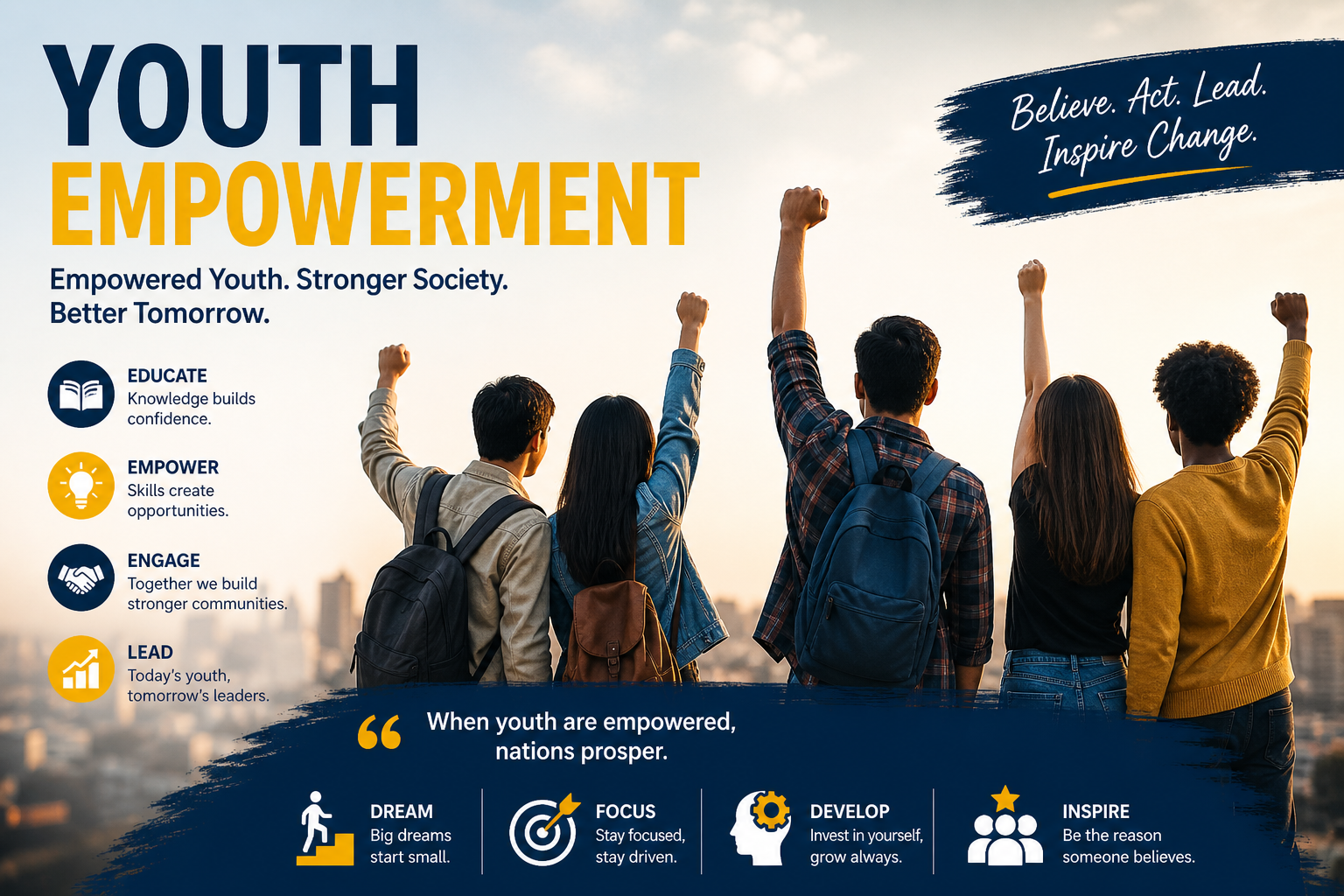
Youth empowerment is a critical pillar for sustainable development and societal progress. Across the world, young people represent not only a large portion of the population but also the greatest reservoir of innovation, energy, and resilience. However, this potential often remains untapped due to persistent challenges. Addressing youth problems, providing practical solutions, and encouraging self-leadership are essential steps toward building a generation that can confidently shape its own future.
Youth Unemployment and Economic Challenges
One of the most widely documented challenges facing young people is unemployment and underemployment. According to global labor trends, youth are significantly more likely to be unemployed than adults, particularly in developing economies. This often leads to financial instability, dependency, and frustration.
Solution:
Addressing this issue requires a shift toward skills development and entrepreneurship. Studies emphasize the importance of Technical and Vocational Education and Training (TVET) in bridging the gap between education and employment. Youth should also be encouraged to explore self-employment opportunities, digital work, and small business ventures. Access to microfinance and startup support programs can significantly improve outcomes.
Skills Gap and Educational Limitations
Research consistently shows a mismatch between what is taught in schools and what the job market demands. Many young people graduate without practical, job-ready skills, leaving them unprepared for real-world challenges.
Solution:
Education systems must evolve to include practical competencies such as digital literacy, communication skills, and financial management. Lifelong learning is also essential. Online education platforms and informal learning opportunities have been cited as effective tools for equipping youth with relevant skills in a rapidly changing global economy.
Mental Health and Social Pressures
Youth today face increasing mental health challenges, including anxiety, depression, and stress. Reports from global health organizations indicate that mental health conditions account for a significant proportion of illness among young people. Social media pressure, economic uncertainty, and lack of direction often contribute to these issues.
Solution:
Promoting mental health awareness and access to support services is critical. Counseling, peer support groups, and open discussions about mental health can reduce stigma and encourage help-seeking behavior. Additionally, teaching coping mechanisms such as stress management and goal setting can help youth navigate life’s pressures more effectively.
Substance Abuse and Risky Behaviors
Studies in public health highlight the growing concern of substance abuse among youth, often linked to unemployment, peer pressure, and lack of purpose. These behaviors can derail promising futures and contribute to cycles of poverty and crime.
Solution:
Preventive measures such as community engagement programs, sports, arts, and mentorship initiatives have proven effective in redirecting youth energy into productive channels. Providing safe and supportive environments helps young people make healthier life choices.
Lack of Mentorship and Role Models
The absence of guidance is another significant barrier to youth empowerment. Evidence suggests that young people with access to mentors are more likely to achieve their goals and make informed decisions.
Solution:
Mentorship programs should be expanded across schools, workplaces, and communities. Connecting youth with experienced professionals provides not only guidance but also inspiration. Mentors can help young people navigate challenges, set realistic goals, and remain accountable.
Encouraging Self-Leadership and Personal Responsibility
A recurring theme in youth development literature is the importance of self-leadership. Empowerment is not only about external support but also about internal transformation. Young people must recognize their ability to influence their own outcomes.
Solution:
Youth should be encouraged to take ownership of their lives by setting clear goals, developing discipline, and maintaining a growth mindset. Research in personal development highlights that individuals who take responsibility for their actions are more likely to succeed. Building habits such as time management, continuous learning, and financial discipline can significantly improve life trajectories.
Leveraging Technology for Empowerment
The digital revolution has created unprecedented opportunities for youth. Reports indicate that digital skills are among the most in-demand competencies globally, opening doors to remote work, freelancing, and entrepreneurship.
Solution:
Young people should actively embrace technology as a tool for growth. Learning digital skills such as coding, content creation, and online marketing can provide access to global markets. With the right approach, youth can overcome geographical limitations and build sustainable careers.
Conclusion: Empowerment Through Action
Youth empowerment is not achieved through policy alone—it requires action from both society and the individual. While governments and institutions must provide enabling environments, the responsibility ultimately lies with young people to take initiative.
The evidence is clear: when youth are equipped with skills, supported through mentorship, and encouraged to take responsibility, they become powerful agents of change. They create opportunities where none exist, solve problems within their communities, and contribute meaningfully to economic growth.
The path forward is one of shared responsibility but individual action. Young people must rise beyond limitations, take bold steps, and lead their own journeys. Empowered youth are not just beneficiaries of change—they are the drivers of it.