Small and Medium Enterprises (SMEs) are the backbone of Ghana’s economy. They contribute significantly to employment, innovation, and economic growth. Yet many SMEs struggle not because they lack customers, but because they fail to manage their tax obligations strategically. In Ghana today, poor tax planning can quietly drain business profits, create cash flow crises, and expose businesses to penalties from the Ghana Revenue Authority (GRA).
Taxation should be viewed not only as a legal obligation but also as a strategic financial management tool. SMEs that understand how to plan taxes properly are often more sustainable, profitable, and attractive to investors and lenders.
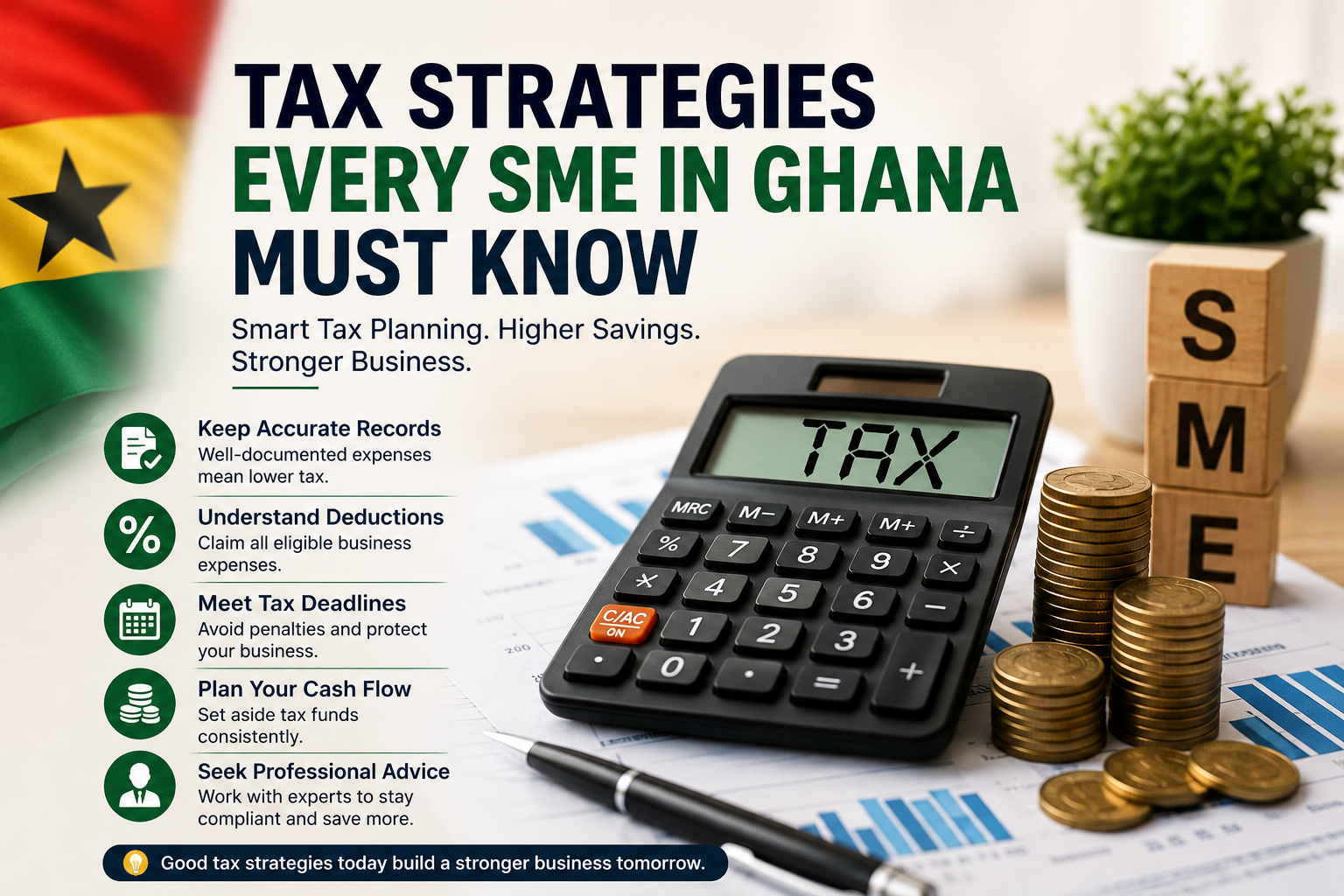
One of the first tax strategies every SME in Ghana must adopt is proper bookkeeping and record-keeping. Many small businesses operate informally, relying on memory or incomplete records to track sales and expenses. This creates major problems during tax assessments. Businesses without proper records often end up overpaying taxes or facing penalties because they cannot justify their deductible expenses. Every SME should maintain accurate invoices, receipts, payroll records, bank statements, and expense documentation. Digital accounting tools such as QuickBooks, Zoho Books, Sage, or even organized Excel systems can significantly improve financial visibility and tax compliance.
Another important strategy is understanding deductible business expenses. Many SMEs pay more taxes than necessary simply because they do not know which expenses qualify as deductions. Legitimate business expenses such as rent, utilities, internet services, transportation, employee salaries, advertising, office supplies, repairs, and professional fees can reduce taxable profits. However, these expenses must be properly documented. In practice, many Ghanaian entrepreneurs mix personal and business expenses, which weakens their tax position during audits. Separating personal finances from business finances is therefore essential.
Cash flow management is another critical tax strategy. One of the most common mistakes among SMEs is using tax money as working capital. Businesses collect taxes such as VAT or withholding tax but fail to reserve the funds for payment to the GRA. By the time payment deadlines arrive, the money has already been used for operations, creating financial stress and penalties. Smart SMEs create dedicated tax reserve accounts and set aside a percentage of revenue monthly for taxes. This simple discipline prevents panic and improves financial stability.
Tax compliance deadlines should also be treated seriously. Many SMEs underestimate the long-term cost of late filings and penalties. Filing annual returns, monthly VAT returns, PAYE contributions, and withholding taxes on time helps businesses avoid unnecessary fines and interest charges. More importantly, compliant businesses are better positioned to access bank loans, government contracts, grants, and investor opportunities. In Ghana’s increasingly regulated business environment, tax compliance is becoming a marker of credibility.
Another overlooked strategy is proper business registration and structuring. Some SMEs continue operating informally to avoid taxes, but this often limits growth opportunities. Registered businesses can access formal financing, partnerships, and corporate contracts more easily. Additionally, choosing the appropriate business structure—whether sole proprietorship, partnership, or limited liability company—can influence tax obligations and operational flexibility. Professional tax and legal advice during business formation can therefore save high costs in the future.
SMEs must also pay attention to Value Added Tax (VAT) obligations. Businesses that exceed the required threshold for VAT registration are legally required to register and charge VAT. Failure to do so can result in large backdated assessments and penalties. However, VAT can also work strategically in favor of businesses because VAT-registered businesses can claim input VAT credits on eligible purchases. Understanding how VAT works can improve pricing decisions and cash flow management.
Payroll tax management is equally important. Employers are responsible for deducting Pay-As-You-Earn (PAYE) taxes and contributing to Social Security and National Insurance Trust (SSNIT) obligations. Poor payroll compliance can create legal liabilities and damage employee trust. SMEs should ensure salary structures are properly documented, and statutory deductions are accurately calculated and remitted.
A practical lesson from many successful Ghanaian SMEs is the importance of tax planning before profit distribution. Some business owners withdraw profits aggressively without considering upcoming tax obligations. When taxes become due, the business lacks liquidity. Wise entrepreneurs project annual tax liabilities in advance and align withdrawals with cash flow realities. Financial discipline is often the difference between sustainable growth and recurring financial crises.
Another important strategy is engaging qualified accountants or tax consultants. Many SMEs see professional accounting services as an unnecessary expense, but experienced professionals often help businesses save far more money through compliance, deductions, planning, and financial efficiency. A good accountant also helps businesses interpret changing tax laws and avoid costly mistakes.
In conclusion, taxation is not merely about paying government obligations; it is a strategic component of business survival and growth. SMEs in Ghana that adopt proactive tax strategies position themselves for stronger profitability, credibility, and long-term sustainability. Proper bookkeeping, cash flow discipline, compliance management, deductible expense planning, and professional financial guidance can transform taxation from a burden into a strategic advantage. In today’s competitive business environment, smart tax management is no longer optional—it is essential for every serious SME in Ghana.