
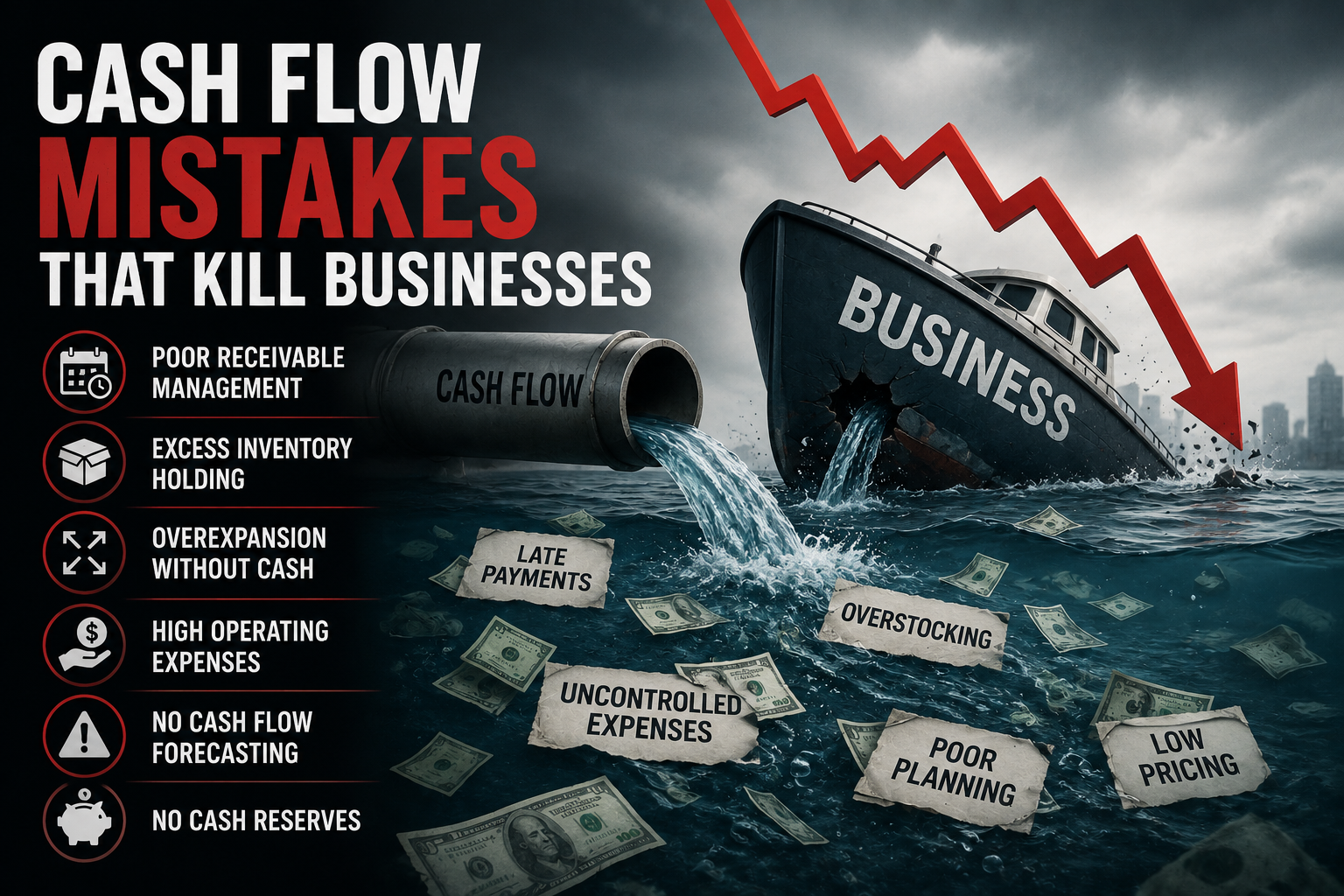
Cash flow is the lifeblood of every business. While profits may look impressive on paper, it is cash flow that determines whether a business survives or collapses. Many promising businesses fail not because they lack customers or revenue, but because they mismanage the timing and movement of cash. Understanding and avoiding common cash flow mistakes is essential for long-term sustainability.
1. Confusing Profit with Cash Flow
One of the most dangerous misconceptions is equating profit with cash flow. A business can be profitable yet still run out of cash. This happens when revenue is recorded (e.g., on credit sales), but cash has not yet been received. Meanwhile, expenses such as salaries, rent, and utilities must be paid immediately.
Failing to recognize this difference can lead to overconfidence and poor financial decisions. Business owners must regularly monitor cash inflows and outflows—not just profit margins.
2. Poor Accounts Receivable Management
Late payments from customers are a silent killer of cash flow. When businesses allow extended credit terms without strict follow-up, they create a gap between earning revenue and receiving cash.
Without a disciplined invoicing and collection system, even high sales volumes can translate into cash shortages. Businesses should:
- Issue invoices promptly
- Set clear payment terms
- Follow up consistently on overdue accounts
Offering small discounts for early payments can also encourage faster cash inflow.
3. Overexpansion Without Adequate Capital
Growth is often seen as a sign of success, but expanding too quickly without sufficient cash reserves can be fatal. Opening new locations, hiring more staff, or increasing inventory all require upfront cash.
If growth is not matched by steady cash inflows, the business may struggle to meet its obligations. Sustainable growth should be paced and supported by strong financial planning.
4. Excessive Inventory Holding
Inventory ties up cash. While having enough stock is important, overstocking can drain liquidity and increase storage costs. Unsold inventory represents money that cannot be used elsewhere in the business.
Effective inventory management involves balancing supply with demand, using data to forecast sales, and minimizing waste or obsolescence.
5. Ignoring Cash Flow Forecasting
Many businesses operate reactively rather than proactively. Without a cash flow forecast, it is difficult to anticipate shortages or surpluses.
A simple monthly cash flow projection can help business owners plan, identify potential gaps, and take corrective action early—such as securing financing or adjusting expenses.
Forecasting is not about predicting the future perfectly; it is about being prepared.
6. Underpricing Products or Services
Pricing directly affects cash flow. When businesses underprice their offerings, they may generate sales volume but fail to generate sufficient cash to cover costs and reinvest in growth.
Pricing should reflect not only costs but also value, market conditions, and desired profit margins. A race to the bottom on pricing often leads to a race toward insolvency.
7. Lack of Emergency Cash Reserves
Unexpected expenses are inevitable—equipment breakdowns, economic downturns, or sudden drops in sales. Without a financial cushion, these events can disrupt operations or force businesses into debt.
Maintaining a cash reserve equivalent to at least 3–6 months of operating expenses provides stability and resilience during uncertain times.
8. Overreliance on a Single Revenue Source
Depending heavily on one customer or income stream increases risk. If that source is disrupted, cash flow can collapse overnight.
Diversifying revenue streams—whether through new products, services, or markets—helps stabilize cash flow and reduce vulnerability.
9. Poor Expense Management
Uncontrolled spending erodes cash flow. Small, recurring expenses can accumulate and become significant over time. Businesses must regularly review their costs and eliminate inefficiencies.
Cost discipline does not mean cutting essential investments, but rather ensuring that every expense contributes to value creation.
10. Delaying Financial Decision-Making
Ignoring financial warning signs is a critical mistake. Declining cash balances, increasing debt, or frequent overdrafts are indicators of deeper issues.
Delaying action often worsens the situation. Business owners must be willing to make timely decisions—whether it involves cutting costs, renegotiating terms, or seeking professional advice.
Conclusion
Cash flow management is not optional; it is fundamental to business survival. Many businesses fail not because of poor ideas, but because of poor financial control.
By understanding the difference between profit and cash flow, maintaining discipline in receivables and expenses, planning, and building financial resilience, business owners can avoid the common pitfalls that destroy otherwise viable enterprises.
Ultimately, business success is not just about making money—it is about managing it wisely.