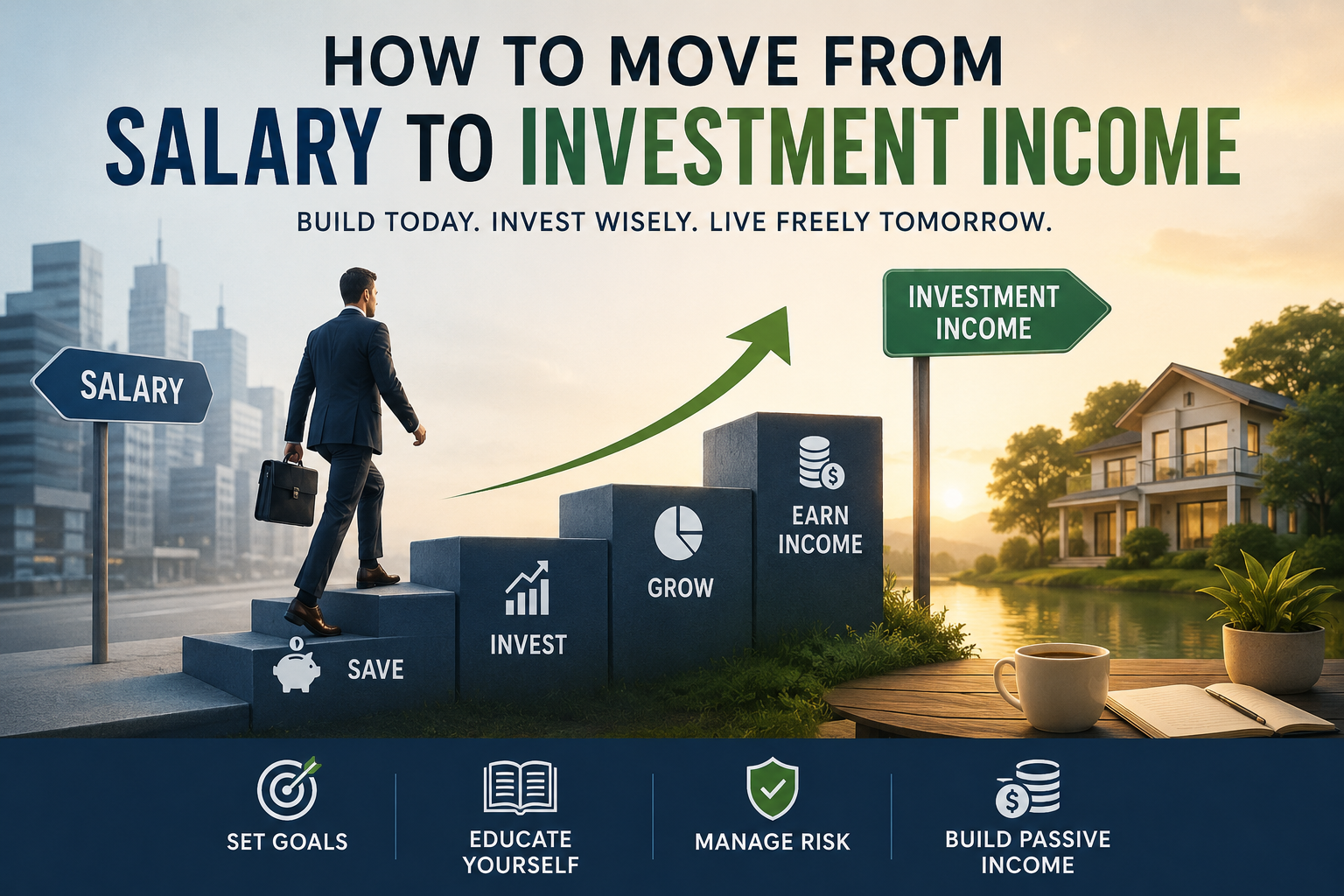
For many professionals, a monthly salary is the primary — and often only — source of income. While stable, this model has a ceiling: your earnings are tied to your time, energy, and employment status. True financial independence, however, begins when your money starts working for you. Transitioning from salary to investment income is not an overnight leap; it is a deliberate, disciplined journey that combines mindset, strategy, and patience.
1. Shift Your Mindset from Consumption to Ownership
The first step is mental. Employees are conditioned to earn and spend, but investors are trained to earn, save, and deploy capital. You must begin to see your salary not as an end in itself, but as a tool — seed capital for future wealth. Instead of asking, “What can I buy?” start asking, “What can I invest in that will pay me back?”
This shift alone separates those who remain financially dependent from those who achieve long-term independence.
2. Build a Strong Financial Foundation
Before investing, you must stabilize your financial base. This includes:
- Creating a budget and tracking expenses
- Eliminating high-interest debt (such as credit cards)
- Building an emergency fund (3–6 months of expenses)
Without this foundation, your investment journey will be fragile. Financial shocks could force you to liquidate investments prematurely, undermining your progress.
3. Increase Your Savings Rate Aggressively
Your ability to transition to investment income depends largely on how much capital you can accumulate. Aim to save at least 20–40% of your income, if possible. This may require lifestyle adjustments, such as reducing unnecessary expenses or increasing your earnings through side hustles, freelancing, or consulting.
The higher your savings rate, the faster you can build an investment portfolio capable of generating meaningful returns.
4. Start Investing Early and Consistently
Time is your greatest ally. Even small amounts invested consistently can grow significantly through compounding. Begin with accessible investment options such as:
- Stocks and equities
- Mutual funds or ETFs
- Government bonds or treasury bills
- Real estate (directly or via REITs)
Consistency matters more than timing. Regular monthly or quarterly investments will smooth out market fluctuations and build discipline.
5. Focus on Income-Generating Assets
To replace your salary, your investments must generate cash flow. Growth assets are important, but income-producing assets are essential. Consider:
- Dividend-paying stocks
- Rental properties
- Interest-bearing securities
- Business investments
Your goal is to gradually increase passive income streams until they can cover your living expenses.
6. Reinvest and Compound Your Returns
In the early stages, resist the temptation to spend your investment income. Instead, reinvest dividends, interest, and profits back into your portfolio. This accelerates compounding and significantly shortens the time required to reach financial independence.
Compounding is powerful — but only if you allow it time to work uninterrupted.
7. Diversify to Manage Risk
No investment is risk-free. A well-diversified portfolio reduces your exposure to any single asset or market. Spread your investments across different asset classes, industries, and even geographic regions where possible.
Diversification protects your income streams and ensures that setbacks in one area do not derail your entire plan.
8. Develop Financial Knowledge and Discipline
Investing is not gambling; it is a skill. Continuously educate yourself on financial markets, economic trends, and investment strategies. Read books, follow credible financial analysts, and stay informed.
Equally important is emotional discipline. Markets will rise and fall, but successful investors remain calm, patient, and focused on long-term goals.
9. Set a Clear Transition Target
You need a measurable goal. Calculate your monthly expenses and determine how much investment income you need to replace your salary. For example, if you need $2,000 per month, and your investments yield an average of 5% annually, you would need approximately $480,000 in invested capital.
This clarity transforms your journey from a vague ambition into a concrete plan.
10. Gradually Transition, Not Abruptly
Avoid quitting your job prematurely. Instead, transition in phases:
- Build investment income alongside your salary
- Reach a point where investment income covers 50–70% of expenses
- Only consider a full transition when your passive income is stable and reliable
This approach minimizes risk and provides psychological comfort.
Conclusion
Moving from salary to investment income is one of the most powerful financial transformations you can achieve. It requires discipline, patience, and a long-term perspective. Your salary is the engine, but investments are the destination.
By saving consistently, investing wisely, and allowing compounding to work over time, you can build a life where your income is no longer tied to your time. Ultimately, the goal is not just to earn more — but to gain freedom, security, and control over your financial future.